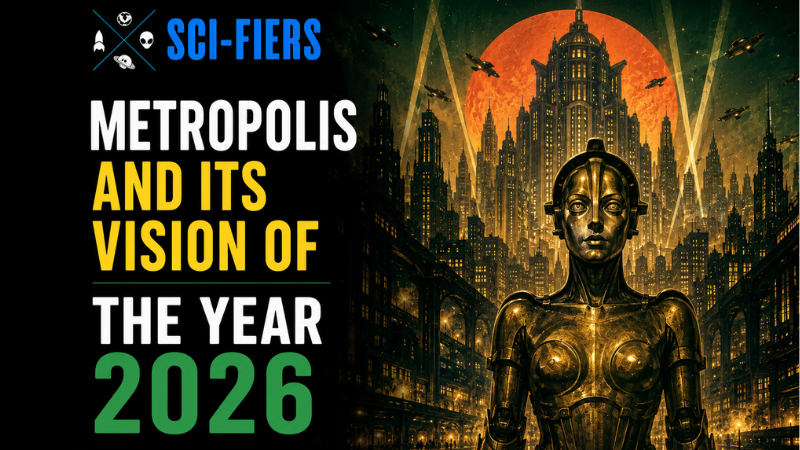
Released in 1927, Fritz Lang’s Metropolis stands as one of cinema’s most influential works of science fiction. Set in the distant future of 2026, the film presents a stark, cautionary vision of an industrialized society shaped by rapid technological advancement, rigid class divisions, and unchecked capitalism. Nearly a century later, its imagined future remains unsettlingly relevant.
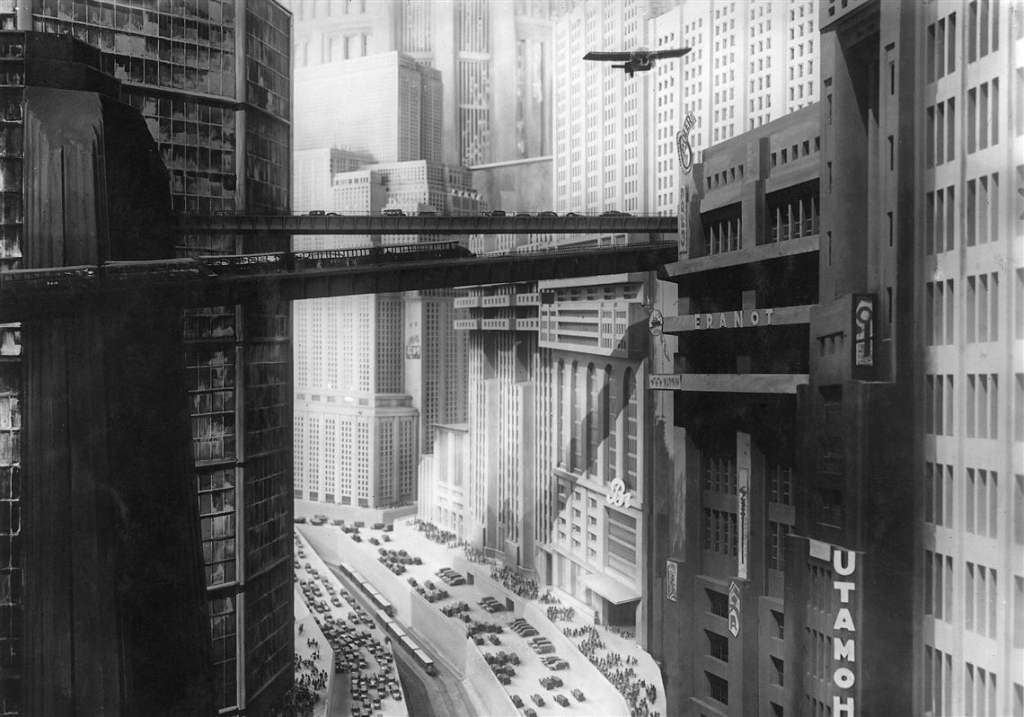
In Metropolis, the city of 2026 is vertically divided—both physically and socially. The elite live above ground in towering skyscrapers, enjoying leisure, luxury, and control, while workers toil underground, operating massive machines that sustain the city. This spatial separation visually reinforces the film’s central theme: the widening gap between those who benefit from progress and those who are crushed by it. Lang’s futuristic skyline, with its soaring buildings, aerial traffic, and mechanized infrastructure, anticipated modern megacities and urban congestion with remarkable foresight.
Technology in Metropolis is portrayed as both awe-inspiring and dehumanizing. Machines dominate daily life, demanding obedience rather than serving humanity. The most iconic symbol of this fear is the Maschinenmensch—the robotic double of Maria—representing anxieties about artificial intelligence, automation, and the loss of moral control. In imagining 2026 as a world where humans are subservient to machines, the film questions whether technological progress without ethical responsibility leads to societal collapse.
Despite its bleak outlook, Metropolis ultimately offers hope. The film’s famous message—“The mediator between the head and the hands must be the heart”—suggests reconciliation between intellect (the ruling class) and labor (the workers) through empathy and understanding. This humanistic resolution positions compassion as the antidote to exploitation, even in a hyper-mechanized future.
Viewed from the real 2026, Metropolis was not a literal prediction but a philosophical warning. While society has not mirrored its extreme dystopia, the film’s concerns about inequality, automation, and power structures remain deeply relevant. Fritz Lang’s imagined 2026 serves less as a forecast and more as a mirror—reflecting humanity’s enduring struggle to balance progress with justice, and innovation with humanity.