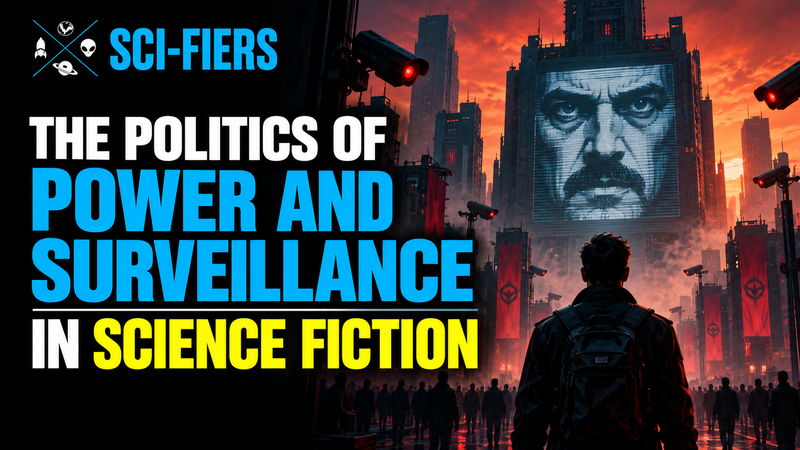
Science fiction has long explored how governments and powerful institutions use surveillance to control people. Through imaginary societies, futuristic technologies, and authoritarian regimes, writers examine the dangers of sacrificing privacy and freedom in the name of security.
An example is Ray Bradbury’s Fahrenheit 451. In the novel, the government bans books and uses technology to distract people from independent thinking. Television and constant entertainment keep citizens occupied, while those who preserve books are treated as threats. Control is maintained not only through censorship but also by discouraging people from questioning authority. Bradbury’s novel warns that when societies abandon critical thinking and allow information to be controlled, people can gradually lose their freedom to think for themselves.
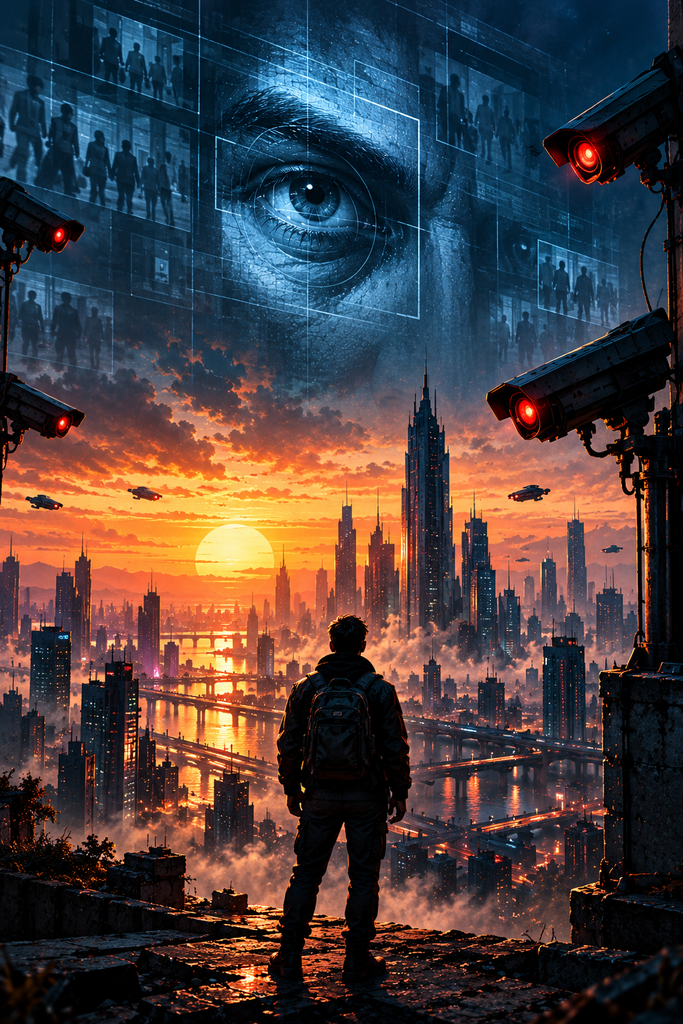
Similarly, the film Minority Report explores a society that uses technology to predict crimes before they occur. Although the system promises public safety, it raises serious questions about justice, individual freedom, and the reliability of prediction. Can someone be punished for a crime they have not committed? The story demonstrates how technological power can threaten civil liberties when institutions are trusted without sufficient scrutiny.
In The Handmaid’s Tale by Margaret Atwood, surveillance operates through social rules, informants, and the control of women’s bodies. The regime maintains authority not only through formal institutions but also by encouraging citizens to monitor one another. This illustrates how surveillance can become embedded in everyday life and relationships.
These fictional worlds resonate with contemporary debates about facial recognition, digital tracking, online privacy, and artificial intelligence. Governments and corporations can collect vast amounts of personal information, often raising concerns about consent, transparency, and accountability. While surveillance can help prevent crime and protect public safety, its unchecked use can concentrate power and weaken democratic freedoms.
Ultimately, science fiction uses imagined futures to question present-day systems of authority. Its warnings are not necessarily predictions of what must happen, but invitations to consider what could happen when technology advances faster than ethical safeguards. By exploring the relationship between surveillance and power, science fiction reminds readers that protecting privacy is also about protecting human dignity, freedom, and the right to think independently.
Scifiers explores science fiction narratives that enliven our imagination and compel us to think about the “what-ifs” of creative world-building. It is on a mission to discuss ideas about sci-fi in its various forms that keep the genre in a state of continuous expansion.