What happens when the world we know no longer exists? What happens when governments fail, cities turn into ruins, technology becomes a threat, and humans are forced to fight for survival? These are some of the questions science fiction writers have explored for decades.
The collapse of civilisation is one of the most popular themes in science fiction. From George Orwell’s 1984 to The Road by Cormac McCarthy, writers have imagined societies where humanity loses its freedom, security, or moral direction. But why are we so fascinated by stories about the end of the world?
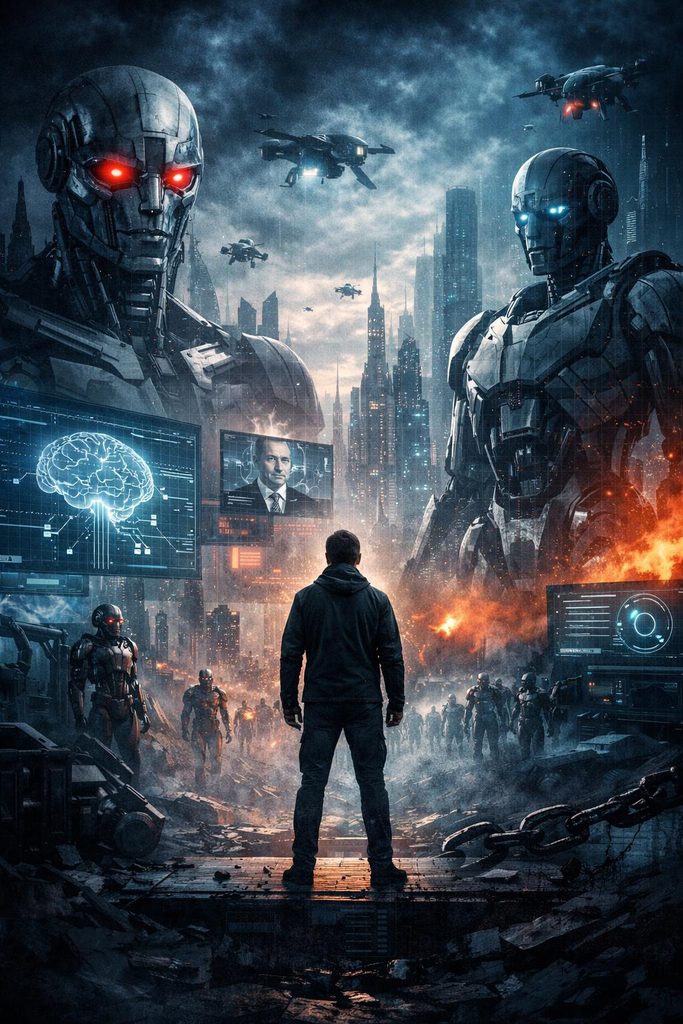
One reason is that science fiction allows writers to examine the weaknesses of the societies in which they live. A fictional future can become a mirror reflecting the problems of the present. In 1984, Orwell presents a world where surveillance and political control have become instruments of power. His story is not simply about a future dictatorship. It is also about what can happen when people lose their freedom to think, question, and express themselves.
Similarly, many science fiction stories imagine the collapse of civilisation because technological progress does not necessarily mean human progress. A society may develop advanced machines, artificial intelligence, and space exploration while failing to address inequality, greed, and the misuse of power. Technology may change how humans live, but it does not automatically change human nature.
Another reason these stories appeal to readers is their exploration of survival. When institutions disappear and familiar rules no longer apply, characters must make difficult choices. They may have to decide whether to protect their families, help strangers, or sacrifice their principles to stay alive. These situations reveal what people value when everything else is taken away.
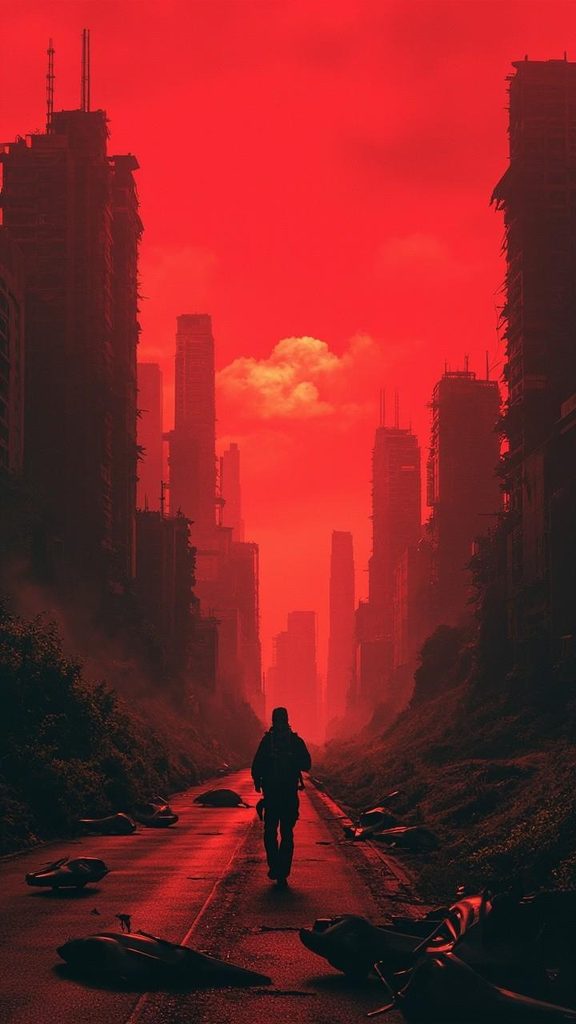
However, science fiction does not always present the collapse of civilization as an inevitable outcome. Some stories warn us about possible futures so that we can avoid them. Others explore how humanity might rebuild after a disaster. Perhaps this is why these stories continue to attract readers. We are not simply interested in watching civilization fall apart. We want to understand why it might happen and what we could lose if it does.
Science fiction reminds us that the future is not shaped by technology alone. It is also shaped by the decisions we make, the societies we build, and the values we choose to protect.
Scifiers explores science fiction narratives that enliven our imagination and compel us to think about the “what-ifs” of creative world-building. It is on a mission to discuss ideas about sci-fi in its various forms that keep the genre in a state of continuous expansion.