
Surveillance as a Tool of Control
George Orwell’s 1984, published in 1949, remains one of the most influential dystopian novels ever written. Set in a totalitarian society ruled by the Party and its mysterious leader, Big Brother, the novel explores how governments can use fear, surveillance, and psychological manipulation to control people. Orwell’s fictional world is disturbing because its methods of control extend beyond physical punishment. The Party seeks to control what people think, what they believe, and even how they understand reality.
In 1984, surveillance is an essential part of everyday life. Telescreens monitor citizens inside their homes, while the Thought Police investigate individuals suspected of disloyalty. People never know when they are being watched, creating a constant sense of insecurity. Even facial expressions can become evidence of thoughtcrime.
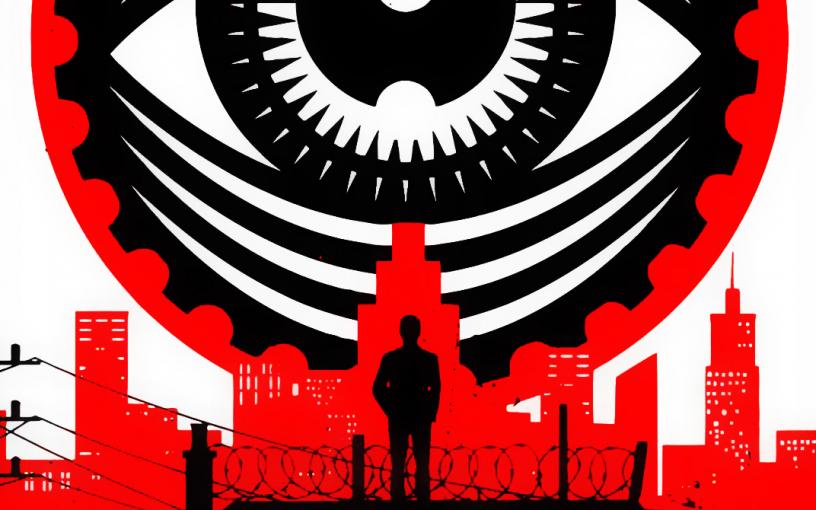
This uncertainty is central to the Party’s power. Citizens learn to regulate their own behaviour because they fear being observed. Surveillance therefore becomes more than a method of gathering information. It becomes a psychological weapon that discourages independent thinking and encourages obedience.
Modern digital technologies make Orwell’s concerns particularly relevant. Smartphones, online platforms, facial recognition systems, and digital tracking can collect extensive information about individuals. Although these technologies also offer practical benefits, their misuse can threaten privacy and personal freedom.
Fear and the Destruction of Individual Freedom
Fear reinforces the Party’s control over society. Citizens are afraid of punishment, imprisonment, and disappearance. However, the Party’s most terrifying instrument is Room 101, where prisoners confront their deepest fears.
Winston Smith, the novel’s protagonist, initially attempts to resist the Party by preserving his independent thoughts and personal memories. Yet torture eventually forces him to betray Julia, the woman he loves. His experience demonstrates how extreme fear can destroy personal loyalty and undermine the courage required for resistance.
Orwell suggests that authoritarian power becomes particularly dangerous when it targets not only the body but also the mind. A person may outwardly obey the authorities while privately disagreeing with them. The Party seeks something more complete: the destruction of independent belief itself.
Controlling Reality
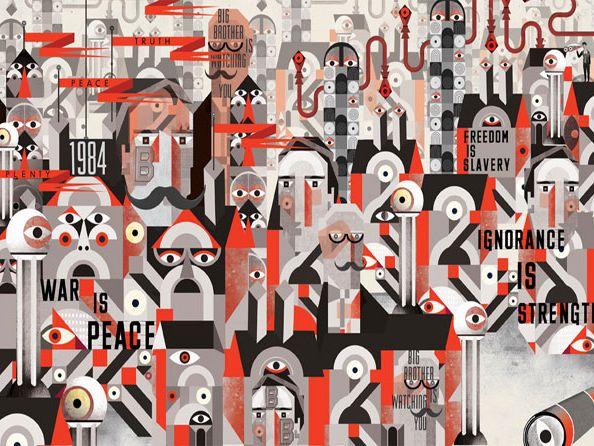
The Party also manipulates truth through propaganda, historical revision, and the slogan “Who controls the past controls the future.” By changing historical records, it weakens citizens’ ability to challenge official claims. When people cannot distinguish truth from manufactured information, resistance becomes increasingly difficult.
A Warning for the Present
1984 is not simply a prediction of a future dictatorship. It is a warning about the conditions that allow power to become oppressive. Surveillance, fear, censorship, and the manipulation of information can weaken democratic institutions when they operate without meaningful accountability.
Orwell’s central message remains powerful: freedom depends on the ability to think independently, question authority, protect privacy, and defend the truth. A society does not lose its freedom in a single moment. It may surrender it gradually, whenever fear becomes more influential than reason and obedience becomes more important than truth.
Scifiers explores science fiction narratives that enliven our imagination and compel us to think about the “what-ifs” of creative world-building. It is on a mission to discuss ideas about sci-fi in its various forms that keep the genre in a state of continuous expansion.