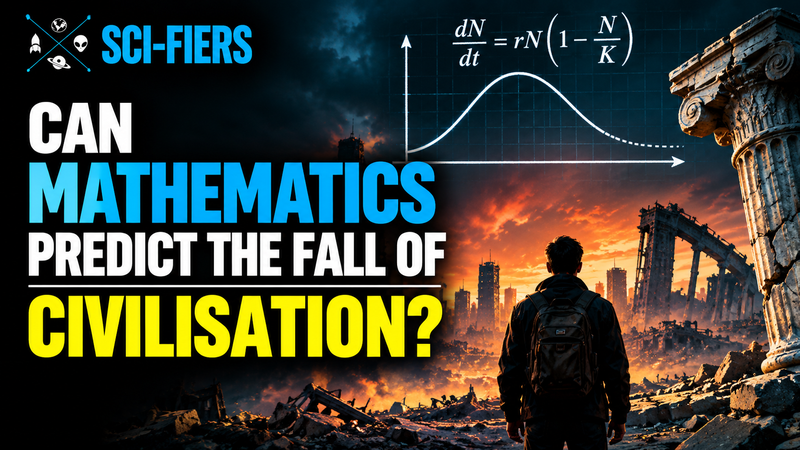
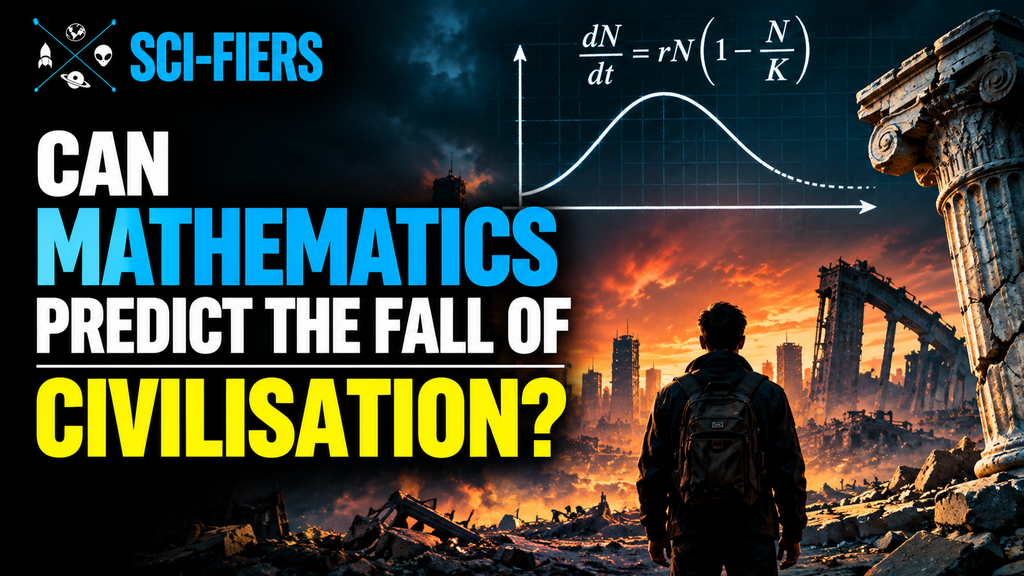
Can mathematics predict when a civilisation will collapse? It may sound like a question from science fiction, but Isaac Asimov explored this possibility in his Foundation series. He introduced the concept of psychohistory, a fictional science that uses mathematics, statistics, and human behaviour to predict the future of large populations.
In Asimov’s imagined world, mathematician Hari Seldon uses psychohistory to foresee the decline of the Galactic Empire. He cannot predict the actions of individuals, but he can estimate how entire populations will behave. His calculations suggest that the collapse of the Empire is inevitable. However, he develops a plan to reduce the period of chaos that will follow.
The idea raises an interesting question about our own world. Do civilisations collapse because of unpredictable events, or do they follow patterns that can be identified in advance? History offers several examples. Economic inequality, political instability, corruption, declining institutions, population pressures, and weak governance can gradually undermine powerful states. Empires may appear strong from the outside while their internal systems become increasingly fragile.
Pakistan, like many developing countries, also faces questions about institutional strength, economic stability, population growth, and public trust. These challenges cannot tell us exactly what will happen, but they can help us understand the risks that societies need to address.
Today, artificial intelligence and big data have brought Asimov’s idea closer to reality. Governments and researchers can analyse economic indicators, demographic changes, public opinion, and political trends to identify possible crises. However, data cannot fully account for human ambition, unexpected decisions, wars, or social movements.
This is where the limitations of psychohistory become important. Mathematics can identify patterns, but it cannot guarantee the future. A society is not simply a collection of numbers. It is shaped by people, institutions, choices, and circumstances.
Perhaps Asimov’s greatest political insight is not that the future can be predicted, but that understanding historical patterns can help societies prepare for it.